

What is Friedreich's Ataxia?
Friedreich’s ataxia (FA) is a rare, progressive neurodegenerative disease that affects the nervous system and the heart. It is caused by mutations in the FXN gene, leading to reduced levels of frataxin — a protein essential for cellular energy production.
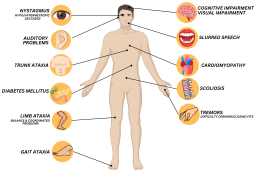
Symptoms of FA:
- Loss of balance and coordination (ataxia)
- Progressive muscle weakness
- Difficulty speaking and swallowing
- Vision and hearing impairment
- Heart complications, including cardiomyopathy
- Shortened life expectancy



Children and FA
Early-onset Friedreich’s ataxia (FA) is the most severe form of the disease. Some children are diagnosed as young as two years old after showing symptoms of FA. The earlier the onset, the more severe and rapidly progressive the disease tends to be.
In many cases, children with FA do not reach adulthood, and those with early-onset face the most aggressive disease progression. Yet, despite this urgency, most FA drug development is focused on adult patients, leaving children at the back of the line.
For us, the urgency is critical, but we are confronted with the reality that the pharmaceutical industry and standard gene therapy development processes move too slowly. Adult trials are prioritized due to market size and perceived safety concerns, delaying potential treatments for children.
The common perception of FA as an adult disease is misleading. While adult patients advocate for trials and therapies, their disease progression is often less severe than that of children. This creates a challenge in raising awareness and generating urgency for pediatric treatments, where the need is greatest.
Children and FA
Early-onset Friedreich’s ataxia (FA) is the most severe form of the disease. Some children are diagnosed as young as two years old after showing symptoms of FA. The earlier the onset, the more severe and rapidly progressive the disease tends to be.
In many cases, children with FA do not reach adulthood, and those with early-onset face the most aggressive disease progression. Yet, despite this urgency, most FA drug development is focused on adult patients, leaving children at the back of the line.
For us, the urgency is critical, but we are confronted with the reality that the pharmaceutical industry and standard gene therapy development processes move too slowly. Adult trials are prioritized due to market size and perceived safety concerns, delaying potential treatments for children.
The common perception of FA as an adult disease is misleading. While adult patients advocate for trials and therapies, their disease progression is often less severe than that of children. This creates a challenge in raising awareness and generating urgency for pediatric treatments, where the need is greatest.
Support life-saving research
This fundraiser is led by parents without any outside support, and we urgently need your help. Every donation goes directly to the gene therapy research that offers real hope of finding a cure for FA.
Support life-saving research
This fundraiser is led by parents without any outside support, and we urgently need your help. Every donation goes directly to the gene therapy research that offers real hope of finding a cure for FA.